Town of Falher – Budget 2026
Cliquez ici pour le FRANÇAIS
Overview
Council’s approach to the 2026 Operating Budget as it relates to taxation was again to maintain service levels and minimize the impact of increases on families. Affordability is a very present matter for Council and their approach to this budget was one of ensuring effective service delivery with minimal impact to households. Thankfully, our municipal assessment did increase slightly this year (for a breakdown on the relationship between assessment, budget, and tax rates, please see below).
After careful consideration, Council did increase the minimum tax in the Town of Falher from $650 to $700. While the minimum tax was revised in 2025 as well, it had not been revised in several years prior, Council felt that it was appropriate to revise this amount in order to maintain a manageable tax rate increase for all properties.
Additionally, Council is acutely aware that the Province’s decision to increase Education Property Tax rates in most municipalities across the province, the Town of Falher’s requisition decreased slightly. (encouraged reading about this Education Property Tax below.)
Overall, the Municipal Operating budget has remained stable with similar expenses and revenues as the previous year, with a slight tax increase simply reflective of slight operating cost increases, offset with a marginally increased assessment.
Below you will find some general information about municipal taxation, followed by additional details from the Town of Falher’s 2026 Operating and Capital Budgets.
Jump to:
Property Taxes Reimagined
General Taxation Information – 2026 Tax Notices
Provincial Payments
Falher 2026 Operating Budget Updates
Falher 2026 Capital Equipment Purchases
Falher 2026 Capital/Large Projects
Property Taxes Reimagined
Our partners at Alberta Municipalities have prepared communications to help citizens understand the complex landscape of property taxes and the challenging & changing circumstances that affect the Town of Falher Council’s decision-making process for Taxation rates.
Fair Funding for Strong Communities
Alberta’s local governments are increasingly under pressure to reduce their property taxes. There are many things affecting municipal budgets and council’s ability to pay for the services, equipment, and infrastructure to have a thriving community.
Alberta Municipalities, as the voice of summer villages, villages, towns, cities, and specialized municipalities in which 85% of Albertans live, has conducted extensive research into the challenges facing communities across the province. Our research looks at trends and issues affecting all municipal governments (both urban centres and rural counties) and our analysis raises questions about how Alberta’s approach to property taxes might be reimagined to enable our communities to be sustainable as they grow.
Full Page: AbMunis Property Taxes Reimagined
We encourage you to click on and review the sections below and engage with the supporting information to become fully informed on the challenges facing Alberta’s municipal governments.
How does Budget 2026 affect you?
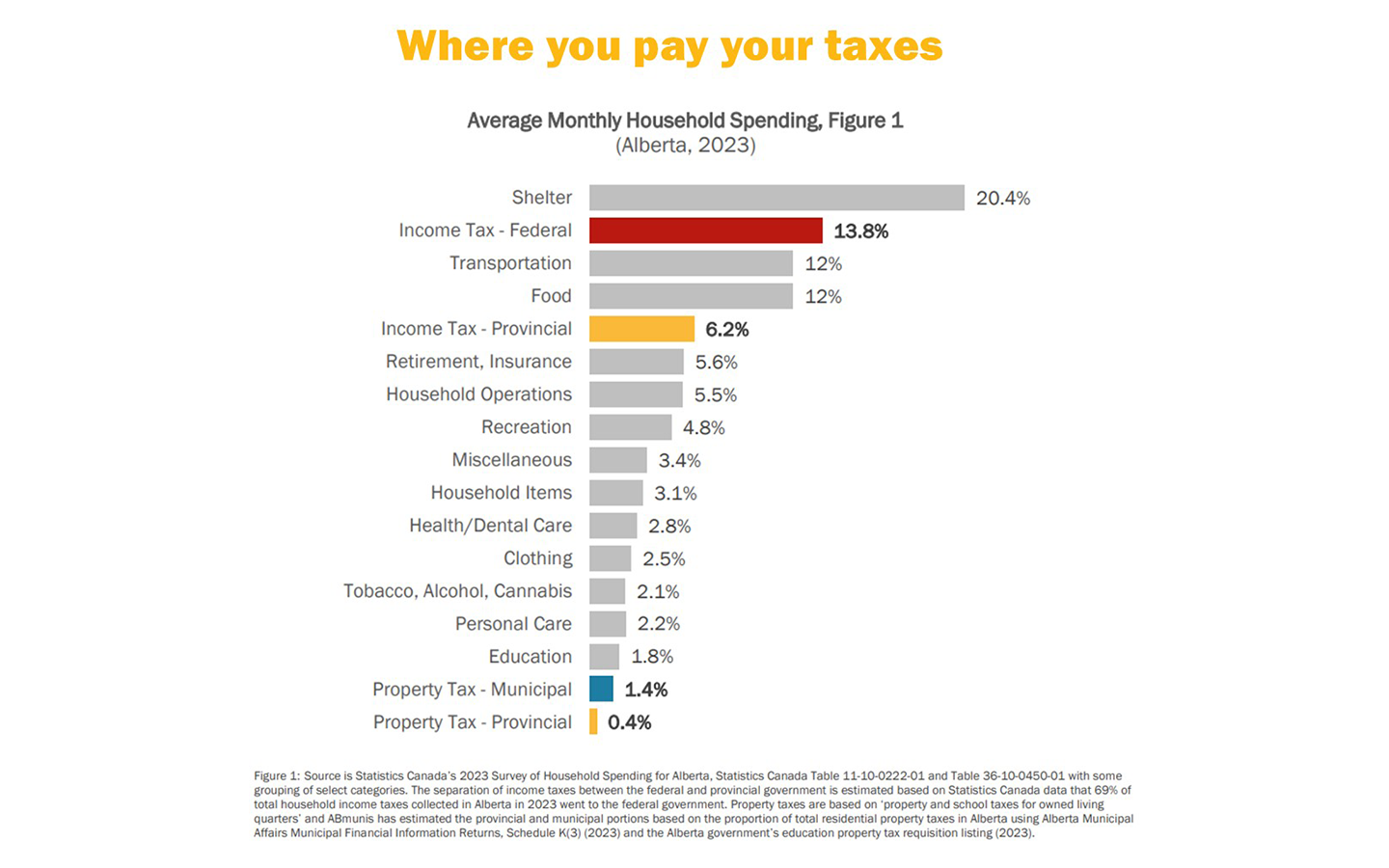
Where do your various taxes go?
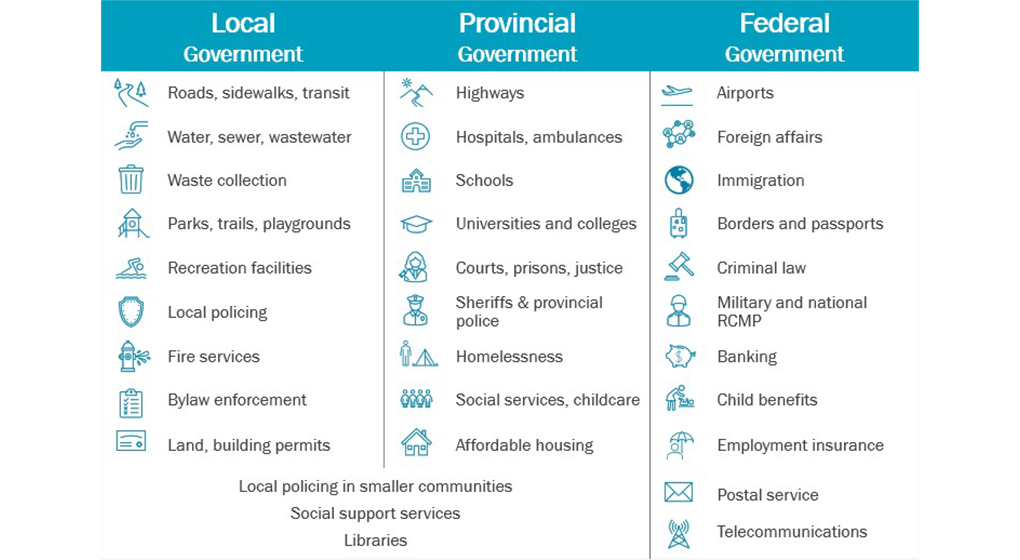
What do your taxes pay for?
Videos and more information
More information and research from Alberta Municipalities can be found here
Alberta Municipalities also have several helpful videos which can be viewed below
General Taxation Information – 2026 Tax Notices
Tax payments are due June 30. Please ensure your payments are postmarked or processed by our financial institution before the payment deadline. If you want to apply for the Property Tax Monthly Payment Plan, please contact our office for more information.
Property taxes collected from residential and non-residential properties are one of the various revenue sources available to the Town of Falher to pay for municipal services.
The Town of Falher distributes property tax notices in late May every year and asks property owners to pay their taxes in full by the due date of June 30 to avoid late-payment penalties.
Your Tax Notice
As a property owner, you receive a property tax notice every May. It indicates your share of municipal and education property taxes and the due date for payment.
Your Notice Explained
The Town believes it is important for you, as a property owner, to fully understand the information shown on your tax notice.
Education Property Tax
Provincial education property taxes are set by the Government of Alberta and account for approximately 15% of the total property tax amount. The Town of Falher collects the education tax amount on behalf of the provincial government.
Your property’s assessed value is used to calculate your share of Falher’s education property tax requisition. This part of your property tax is collected by the Town and sent to the Government of Alberta. The Town of Falher has no direct control over this amount and must collect it on behalf of the Government of Alberta.
Who Pays
All property owners in the Town of Falher, residential and non-residential, are required to pay education property taxes including those without children in school and senior citizens.
Use of Education Tax
The Government of Alberta states that education property taxes support public and separate school students in kindergarten to grade 12. Education property taxes are pooled and then distributed to all Alberta school boards on an equal per-student basis. The majority of these funds are for instruction, including teacher salaries, textbooks, and other classroom resources. For more information, please visit: Education Property Tax – Government of Alberta
Heart River Housing
A portion of your municipal tax bill is a regional requisition. In Falher, this is Heart River Housing. This regional requisition is determined by an independent board of individuals who may or may not be municipal elected officials from several communities. This part of your property tax is collected by the Town and sent to Heart River Housing. While the Town of Falher has 1 elected individual on the board, The Town of Falher has no direct control over this amount and must collect it on behalf of Heart River Housing.
Heart River Foundation was established in 1960 for the operation of seniors’ lodges in our region. In 1995, Heart River Housing was established as a Management Body under the Alberta housing Act. Heart River Housing represents 11 municipalities in the area: Big Lakes County, Donnelly, Falher, Faust, Fox Creek, Girouxville, High Prairie, M.D. of Greenview #16, Northern Sunrise County and Valleyview. They provide housing supports to more than 1,000 individuals in over 650 housing units.
Municipal Taxes
Municipal property taxes are set by the Town of Falher and help pay for a variety of services the Town provides. These services include:
- emergency services
- road maintenance and snow clearing,
- recreation such as parks, arena, curling rink, and swimming pool
- neighbourhood infrastructure.
Municipal property taxes are set by Council. The calculation of each property owner’s share of municipal property taxes is based on 2 factors:
- The Town of Falher Budget
(the amount the Town requires to continue offering municipal programs and services). - The total assessed value of all properties in our Town.
The costs of services are distributed among all properties, in the following manner:
budget ÷ total assessed value of all properties
= municipal tax rate
Then, to determine the exact amount each property owner is required to pay, the Town applies this tax rate to the value of your property in the following manner:
your property assessed value x municipal tax rate
= your municipal property taxes
Overall, changes in property values do not affect the amount the Town requires to continue providing municipal programs and services. If your property’s assessed value changes more or less than the average change in Falher, your tax increase will be more or less than the average tax increase.
Relationship between property assessment value and property taxes
Often the terms “assessment” and “taxation” are considered to be interchangeable.
However, assessment and taxation are very different. Although one impacts the other, each is a distinct and independent process.
“Assessment” is the process of estimating a dollar value on a property for taxation purposes. This value is used to calculate the amount of taxes that will be charged to the owner of the property.
“Taxation” is the process of applying a tax rate to a property’s assessed value to determine the taxes payable by the owner of that property.
The Municipal Government Act gives direction to Alberta municipalities in the areas of governance and administration, planning and development, and assessment and taxation.
Greater Detail on Assessment
Who prepares assessments in Alberta?
Assessments for all types of property are prepared by professional, certified assessors. Assessors receive training in a variety of areas including property valuation techniques, legislation, and quality assurance.
An assessor is hired by a municipality in one of two ways—as an employee of the municipality, or as a contractor. Contracting often occurs in smaller municipalities where the duties associated with calculating assessments are not a full- time activity. (The Town of Falher contracts this service from Compass Assessment Consultants Inc.) Regardless of the assessor’s employment situation, all assessors, whether they are contractors or municipal employees, must follow the same procedures and legislation. The majority of assessments prepared by the municipal assessor.
Assessment notices
Assessment notices are created from the information on the assessment roll. The assessment notice is the document municipalities send to property owners to tell them about the assessment of their property. An assessment notice or an amended assessment notice must show the following:
- the same information that is required to be shown on the assessment roll;
- the notice of assessment date;
- a statement that the assessed person may file a complaint not later than the complaint deadline; and
- information regarding filing a complaint in accordance with the regulations.
Each year, municipalities and the provincial assessor will be required to set a “notice of assessment date” between January 1 and July 1 and mail the assessment notices seven days prior to the “notice of assessment date.” Every municipality is required to send an assessment notice to every assessed person listed on the assessment roll. Each municipality must publish a notification to announce that the assessment notices have been mailed to property owners within the municipality.
The Town of Falher’s looks like this and was posted on May 21st, 2026
Sometimes an error is found on an assessment notice. The assessed person can contact the assessor to have this information corrected. Corrections can only be made to current-year assessment notices. This means that an assessor cannot change an error, omission, or wrong description on an assessment notice from a previous year.
Each property listed on the assessment roll in a municipality receives an assessment notice, even if it is exempt from property tax. One of the important features of Alberta’s assessment system is that assessed persons have the ability to complain about their assessment or tax status. If an assessed party believes that his or her property should receive an exemption from assessment, property taxation, or both, then the property’s exemption status can be challenged via an assessment complaint. (appeal)
How to file a complaint
Complaints must be filed in the form prescribed in the regulations on or before the deadline shown on the assessment notice.
The complaint must:
- indicate what information shown on an assessment notice or tax notice is incorrect;
- explain in what respect that information is incorrect;
- indicate what the correct information is; and
- identify the requested assessed value, if the complaint relates to an assessment.
If an assessment notice and tax notice are combined, the deadline for filing a complaint is on the tax notice. Municipalities must give the assessed person 60 days from the notice of assessment date to file a complaint.
Once the complaint has been filed, the assessment review board clerk will receive, review, and categorize the complaint. All parties will be notified of the date of the hearing, the timelines by which disclosure of evidence is required to be provided to the other parties and to the board, and the rules for disclosure of evidence. At the hearing, the complainant presents his or her case to the board. The respondent (usually the local assessor) presents information on behalf of the municipality. The assessment review board has 30 days after the hearing within which to render its decision. All decisions of an assessment review board must be in writing.
Impact of assessment complaint decisions
It is important to note that any decision an assessment review board makes is for the current year’s assessment only. This means that the decision does not apply to previous assessments, nor will it be applicable to the next year’s property assessment. For example, if the assessed value of a property is decreased as a result of a board’s decision, it will not result in adjustments to previous years’ assessments, nor will it necessarily have any bearing on assessments that are prepared in the future.
Information above is based on the Guide to Property Assessment and Taxation in Alberta and other information originally published by the City of Edmonton 1 2
Provincial ‘Flow Through’
New Police Funding Model
The Police Funding Regulation came into force on April 1, 2020 and changed how police services in the province were funded. Previously, under the Police Act, the Alberta government was (financially) responsible for providing police services to those municipalities with populations of 5,000 or less (through the RCMP), as well as to all municipal districts and counties, at no direct cost to them. The police funding model (PFM) takes the total cost of frontline officers and redistributes a portion of those costs to municipalities who receive the services of the Provincial Police Service (RCMP). The new PFM requires those communities that have not previously paid for frontline policing to begin contributing a portion of the costs. This change in funding came with promises of increased hiring and services to all detachments.
In the initial 5 years of PFM, the Town of Falher’s contributions rose significantly with no additional members at the local RCMP detachment. Beyond the initial 5-year term, the Alberta Government also did not adequately or transparently provide continuing costs for municipalities to budget appropriately.
Town of Falher Council feels that these cost increases, without a corresponding increase in service, are unsustainable for small communities and Council continues to advocate for lower costs while maintaining a healthy relationship with the RCMP, in opposition of an Alberta Provincial Police Service. While the Town of Falher continues to advocate for reasonable costs and further transparency in the services provided, this funding model remains in place.
2026 Town of Falher – Police Funding Model Invoice: $54,696
2025 Town of Falher – Police Funding Model Invoice: $47,713
This amount is included in the 2026 Town of Falher Operating Budget and represents an increased cost in your property taxes with no increase in services directly provided by the Town of Falher. While it is collected by the Town of Falher, it is paid directly to the Provincial Government as a flow through. The Town of Falher has no direct control over this amount and must collect it on behalf of the Government of Alberta.
**
Understanding Education Taxes
In Alberta, part of the property taxes collected by municipalities is actually a provincial requisition for funding that goes toward funding the kindergarten to Grade 12 (K-12) education system. This education tax is one of two primary funding sources for schools, with the other being general provincial revenues. Together, these two funding streams help ensure consistent and reliable support for education across the province.
Each year, the provincial government determines how much each municipality must contribute to education, based on local property assessment values. Municipalities are responsible for collecting this portion of property tax from residents and passing along the funds to the Province.
The Province has increased education property tax rates in Budget 2026, following a an increase in 2025 as well. Municipalities across Alberta are facing higher education property tax requisitions in 2026 compared to 2025, with the percentage of increase varying considerably depending on the type and location of the municipality and the category of property.
In this case however, the Town of Falher presents as an exception to the rule for 2025 with a slight decrease.
Click here for the Property Tax Comparison Report
Click here for Education Property Tax Fact Sheet
This portion listed on your Notice of Assessment and Taxation is collected by the Town of Falher, it is paid directly to the Provincial Government as a flow through. The Town of Falher has no direct control over this amount and must collect it on behalf of the Government of Alberta.
Budget 2026 – In-Depth
Operation Updates
Big Red Slide – FAQ/Update
What’s going on with the Big Red Slide?
In the Spring of 2023, it was reported to our Office that there was significant damage to the ‘Big Red Slide’ in the Honey Capital Park. The slide tube had cracked, and had eventually split, resulting in a complete separation. The damage was noticed and reported to the Town of Falher in the Spring of 2023, having seemingly happened over that winter. Throughout 2023 our team identified the issues and began the planning process to address the matter.
With the work required to repair the tube, it was also apparent that the black and white panels on each floor of the tower also required attention. Direct exposure to sunlight has been causing large temperature changes in the puckboard material, creating significant expansion and contraction. This movement had enough force to cause considerable tension on the mounting hardware, and in some cases was sheering the bolts.
Ok so there’s problems. What now?
In 2023, our team ordered a new piece of slide tube. This had to be custom manufactured and delivered to Falher from Ontario. This arrived in the 2023-2024 Winter season.
In 2023, our team also identified that the puckboard panels could be replaced with a material that would expand/contract less with the temperature changes. Steel was purchased, cut and painted to prepare for the change and repairs.
In 2024, as we began preparations for the repairs, updates were delivered to Council and in June Council directed administration to receive guidance from an engineer to ensure that our plan of action. Not only for obvious reasons of safety, but also to ensure that our plan would ensure efficient use of resources to avoid a similar situation in the future.
Immediately after this Council direction, our team began consultation with a recommended structural engineer. However, this relationship quickly deteriorated as the engineer stopped returning phone calls and emails. Our team then pivoted, and went to another engineer and has been working with him on the necessary details for our slide repairs.
What happened in 2025 and will the slide be done in 2026??
In 2025 our contracted Engineer delivered a report and approved our plan of action. Crews conducted a majority of the panel swaps and will complete the work as soon as able in 2026.
Additional setbacks presented themselves in 2025 as well as crews discovered there was a discrepancy in the tube sizing that that previously delivered. Although it was incredibly close, there was a slight error in manufacturing and the tube’s diameter was slightly too small to install correctly.
After lengthy discussions with the manufacturer and provider of the tube, a replacement tube was sent into production for replacement at no additional cost to the Town of Falher. This new tube was received in late fall of 2025. The company that provided the tube was also empathetic to the time that our community has been without such a mainstay fixture and has offered to send additional personnel for the installation of the tube.
With cooperative weather, we plan to have the slide tube installed by mid-June, with the obvious possibility of further setbacks, changes, or scheduling changes.
As we have seen in the past, plans may change due to outside circumstances, however we are committed to doing what we can to have this completed this year in order to have this amazing community feature available to all.
This project is being funded solely by the Town of Falher through taxation, reserves, and basic operational grants provided annually to the Town by the Province.
Abnormal Snow Season
Considering the incredibly abnormal snowfall we received over the recent Winter, considerable adjustments to our typical ‘Contracted Services’ expenses were required for the 2026 Operating Budget when compared to previous years. This includes additional in-house contracted assistance for Town of Falher services such as snow removal, 3rd party services for additional equipment assistance for graders, skid steers, etc, as well as external contractors for clearing our storm water routes of excess snow in order to allow for effective flow during the snow melt process.
This additional service demand placed a need for nearly $70,000 of additional resources to the 2026 operating budget. This demand was funded by operating reserves that have been built up over time, in addition to general operating revenues.
Sidewalk Repairs
In 2026 we will be reinvesting into additional maintenance for our sidewalk networks in the Town of Falher. An external contractor will be brought in to address tripping hazards and uneven sections around Town.
Combined with previous processes of a full condition assessment of our sidewalk network, the Town of Falher will have quality information to adequately plan for the future of sidewalks in our community.
Pool
For the first time after pandemic closures and negative spin off effects, the Falher Regional Pool is poised to have a full compliment of pool staff. This means a full slate of services including school swimming lessons, extended operations for regular pool programming, and summer lessons.
This year, the Falher Regional Pool will be receiving some assistance from Canada Summer Jobs.
Capital Purchases & Projects
Equipment Purchases
Trucks
Over the years, the Town of Falher has been fortunate to extend the life of several Public Works trucks well beyond their anticipated life. In 2026 however, the Town of Falher will be purchasing 2 new trucks, with another purchase planned for 2027. These purchases will allow us to retire 3 aging units from 2010, 2003, and 2000.
Backhoe
In 2026 the Town of Falher will be refreshing its compliment of equipment with a new backhoe. This unit will be similar to the loader unit that the Town of Falher purchased in 2021 however this new unit will have backhoe capabilities at the rear of the unit.
Large / Capital Projects
- Main Street – Sanitary Sewer Trunk Main Replacement & Water System Improvements
- In 2025, the Town of Falher through the assistance of external engineers undertook a Regional Infrastructure Master Plan. During this process it was discovered that there is significant damage to the Sanitary Sewer Trunk Main on Main Street (approx. between 2nd Street and 3rd Street; southbound).
- The importance of this infrastructure and its potential risk of failure meant that its replacement became the top priority for the Town of Falher.
- Planning for this project has continued since discovery and through the Winter in order to have the project take place in 2026.
- The project scope will involve deep excavation on Main Street for the replacement of Water and Sewer infrastructure in order to ensure the Town of Falher is safe and healthy for future generations.
- Current projections of this project estimate a total project cost of nearly $1,200,000.
- More information as well as specific impacts to residents and businesses will be made available as we approach project kick off.
- The World’s Largest Bee: Destination Falher Initiative Project
- The Town of Falher is moving forward with an exciting initiative to refresh and enhance one of our community’s most recognizable spaces, the World’s Largest Bee Park. With support from both the Province through its Small Community Opportunity Program (SCOP) and the Municipal Project Fund (MPF) from the Peace Region Economic Development Alliance, the World’s Largest Bee: Destination Falher project aims to celebrate Falher’s unique identity as the Honey Capital of Canada, while highlighting our Francophone heritage and agricultural roots through thoughtful design and community-focused improvements.
- Key components of the project include:
- A new bilingual welcome sign along Highway 49, reflecting Falher’s agricultural and Francophone identity.
- Landscaping and lighting upgrades to create a more welcoming and visually engaging park.
- A covered outdoor performance stage to host cultural and community events.
- Interpretive and bilingual signage sharing Falher’s agricultural and cultural history.
- The Town of Falher aims to have this project completed in 2026, but with milestones delays, the project may extend in 2027.
- This Initiative is made possible through a $90k grant from the Ministry of Agriculture and Irrigation’s Small Community Opportunity Program (SCOP) ; in addition to $60k from the Town of Falher and $3k from The Peace Region Economic Development Alliance (PREDA) with additional funding sources potentially being announced very soon.
- Northern Regional & Municipal Strategic Alignment & Collaboration Initiative
- The Northern Regional & Municipal Strategic Alignment & Collaboration Initiative is a joint project between the Towns of Falher and McLennan, the M.D. of Smoky River, and the Village of Donnelly to help municipalities plan for the future together while still maintaining their own local priorities and independence.
- The project will involve hiring a professional third-party facilitator to work with Councils and Administration to review regional challenges, identify opportunities, and develop updated strategic plans for each municipality. The process will also create a regional framework to improve communication, coordination, and long-term planning between partner municipalities.
- The goal of the project is to strengthen regional cooperation, support sustainable municipal services, improve decision-making, and help municipalities respond to challenges such as rising service costs, budget pressures, and population decline.
- The project is funded 100% through the Alberta Community Partnership (ACP) grant program, helping reduce financial impacts on participating municipalities while providing access to professional planning expertise.
- The current budget for this project totals $185,000
- Regional Infrastructure Strategy (RIS)
- In 2025 the Town of Falher and the Municipal District of Smoky River were successful in obtaining funding from the Provincial Government for a Regional Infrastructure Strategy (RIS). The work for this project began in 2025 and will be completed in 2026.
- In partnership with the Municipal District of Smoky River, this funding will support the development of a Regional Infrastructure Strategy (RIS). As a key service hub for the region, Falher plays a central role in the delivery of municipal infrastructure and services that extend beyond our boundaries.
- This project will help both municipalities better understand the condition of critical infrastructure—such as water, wastewater, stormwater, roads, and public facilities—and will provide a detailed roadmap for future maintenance and capital replacement projects. The study will also support long-term regional planning, economic development, and improved service delivery across municipal lines.
- The project is also funded 100% through the Alberta Community Partnership (ACP) grant program to a total of $200,000 with no matching municipal contribution required.
- The information delivered from this project will assist with the Town of Falher’s long term Capital Planning and Asset Management.
